
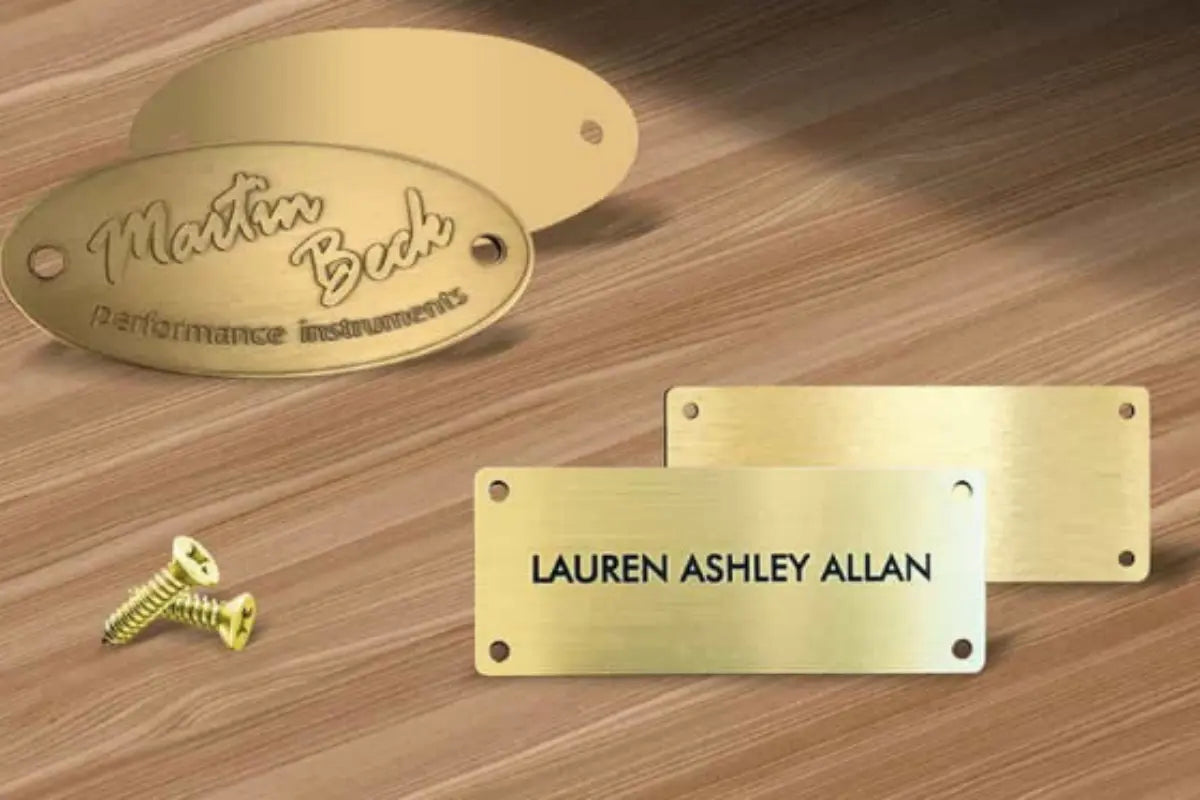
A nameplate is a highly personalized and commemorative item. Whether it’s a metallic corporate logo, a warm and delicate wooden nameplate, a classic and understated stone nameplate, or an exquisitely crafted jewelry nameplate, they all leave a unique mark on you over time.
To create a nameplate with exquisite details and a high-quality feel, passion alone is far from enough—you need a deep understanding of the engraving methods for different materials, tool selection, and operational details. Today, let’s talk about: How to quickly own your own personalized nameplate?
I. The Art and Science of Nameplate Making
The value of a nameplate lies in the word “customized.” It can be a chest badge, a company nameplate, a commemorative pendant, or even a small ornament engraved with a vow of love. Behind every nameplate lies an ancient yet modern craft—engraving. Modern engraving is no longer limited to the precise grinding of hand tools. With the widespread use of electric engraving pens, micro-engraving equipment, and laser engraving machines, we can complete works that would take traditional craftsmen several days to finish with greater precision and faster speed. However, to truly create a high-quality nameplate, the choice of tools and techniques is key.
II. Differentiating Engraving Tools
The first step in creating an ideal nameplate is understanding the differences between tools.
1. Hand Engraving Knives
Traditional hand engraving knives are suitable for works that aim for a “warmth” effect. The controllable blade and natural lines make them ideal for relief carving on wooden or stone nameplates. The difficulty of hand engraving lies in stability, requiring the engraver to have sufficient control and experience.
2. Electric Engraving Pens
Electric engraving pens are the core tool in modern nameplate production. Through motor-driven vibration or rotation of the cutting head, delicate lines and text can be easily engraved on hard surfaces such as metal, stone, glass, and wood.
It is important to note that different materials have drastically different requirements for the cutting head:
When engraving metal nameplates, it is recommended to use tungsten carbide or diamond-coated cutting heads.
When engraving wooden nameplates, steel round-tipped cutting heads are more suitable.
For stone or jewelry nameplates, high-hardness diamond cutting heads should be selected.
During the engraving process, the cutting tool needs to be constantly switched—not only to maintain sharpness, but also to adjust the line thickness according to the texture and details, giving the engraving a greater sense of depth and three-dimensionality.
3. Micro-engraving Equipment
When extremely detailed patterns or micro-text are required on nameplates, such as jewelry nameplates, brand logos, or metal part numbers, a stereo microscope must be used in conjunction with a micro-engraving pen.
Operating under a magnifying glass, the engraver can see details invisible to the naked eye, and through minute angle adjustments, complete precise engravings that are almost impossible to achieve with the naked eye.
III. Key Points for Engraving Nameplates of Different Materials
The hardness, texture, and ductility of different materials determine the engraving techniques and tool selection. Below, we explain four common types:
1. Metal Nameplates
Metal nameplates are most commonly found in corporate logos, machine nameplates, pet tags, and military tags. They are characterized by their hardness, wear resistance, and corrosion resistance, but are highly difficult to engrave.
Recommended Tools: Electric engraving pen + tungsten carbide/diamond tip, stereo microscope (for detail work)
Engraving Techniques:
l Before engraving, apply a non-slip coating (such as blue engraving paste) to the metal surface to prevent the tool from slipping.
l First, pre-carve lines at a low speed, then gradually increase the speed to deepen the engraving.
l Fine patterns can be fine-tuned under a microscope to ensure even lines.
l After engraving, polish with fine sandpaper and then spray with an anti-oxidation transparent varnish.
2. Wooden Nameplates
Wooden nameplates are often used for decoration, gifts, or souvenirs. Wood is highly malleable and has rich textures; hand carving can showcase its natural, warm beauty.
Tools: Hand carving knife + electric engraving pen (for finishing), wood (walnut, cherry, white oak, sandalwood, etc.)
Engraving Techniques: Before carving, lightly sketch the outline of the pattern with a pencil to prevent mistakes.
l Apply pressure along the grain of the wood to avoid chipping against the grain.
l For nameplates requiring a bas-relief effect, first use a carving knife to create the basic structure, then use an electric carving pen to refine the texture.
l After carving, apply wood wax oil or varnish to protect the wood and enhance its texture.
3. Stone Nameplates
Stone nameplates are known for their weight and durability, and are commonly used for tombstones, monuments, and architectural inscriptions. Their carving is extremely difficult, requiring a higher level of tool hardness.
Recommended Tools: High-speed electric carving pen + diamond tip, suitable for marble, granite, and shale.
Carving Techniques: Before carving, outline the shape with a metal pen.
l Use the “point carving” or “line cutting” method to gradually etch, avoiding strong pressure on the tool.
l After carving, apply wax to prevent moisture damage.
4. Jewelry Nameplates
Jewelry nameplates are often used on the inner walls of rings, the backs of pendants, or commemorative pieces, requiring extremely limited space and high precision.
This type of engraving is no longer a contest of strength, but a microscopic art of precision.
Recommended tools: Micro-engraving pen + microscope + electric polisher. Common materials: gold, silver, platinum, stainless steel, titanium alloy.
Engraving techniques: Use a microscope with 5 to 20x magnification to precisely control the strokes.
l During engraving, the jewelry must be fixed on a shockproof table; any vibration may cause the lines to shift.
l Use layered etching techniques to create different depths of luster.
l After completion, use an ultrasonic cleaner to remove dust, then polish with a soft cloth.
Engraving is not just about creating a nameplate, but about creating a unique memory
Whether it’s hard metal, warm wood, or dazzling gemstones, the meaning of engraving lies in giving it a soul.
When you pick up the engraving knife, replace the tip of the new electric engraving pen, and make the first mark on the material, at that moment, you become a recorder of time. Having a personal nameplate is not just about completing an object, but about embodying an identity, an emotion, and a memory.