
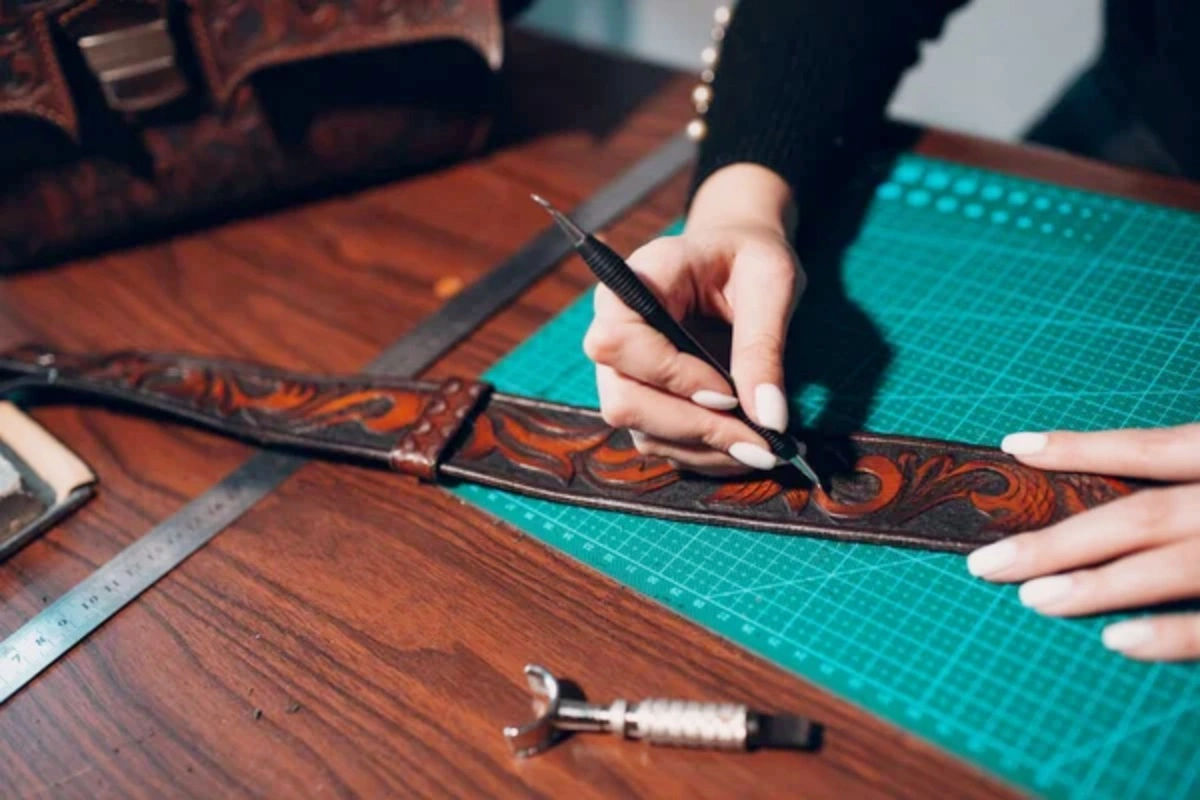
A lot of people don’t first notice Western scroll engraving in some museum—it’s in the little details of old buildings.
The first scroll carving I ever noticed wasn’t on a firearm. It was on an old oak cabinet sitting in the corner of a hotel lobby. I must have walked past it dozens of times before I realized how much detail was hidden inside those curling leaves.
At engraving exhibitions, visitors often spend several minutes looking at a scroll design without realizing their eyes are following the backbone line.
Funny thing is, this design has been popular for centuries, but it still shows up all the time on high-end custom furniture, jewelry, and gun engraving. Compared to all those trends that come and go, scrollwork never really left the spotlight.
The historical origins of scroll engraving

Ask a few engravers where scrollwork comes from and you’ll probably get slightly different answers. Some point to architecture, others to metal engraving, and a few will simply say the style has been around longer than anyone can remember.
The leaf forms most people associate with Western scrolls can be traced back to acanthus designs used in classical architecture. Over the centuries those shapes migrated from stone to metal, wood, and eventually firearms. The surprising part isn’t where the design began, but how easily it adapted to completely different crafts.
That’s part of the reason scrollwork never really disappeared. The same flowing pattern could look equally at home on a cabinet door, a silver serving piece, or a custom shotgun.
While many decorative trends disappeared after a generation or two, scrollwork continued evolving alongside changing styles. That long history is one reason it still carries a sense of prestige today.
So what do great scroll patterns have in common?
When people first compare average scrollwork with exceptional scrollwork, the difference isn’t always easy to explain. In many cases the individual leaves look similar, and the tools used to create them aren’t much different either.
The distinction usually appears when the eye starts moving through the design. Good scrolls seem to lead the viewer naturally from one area to another without creating dead spots or awkward gaps. Nothing feels forced.
Spend enough time studying master engravings and another pattern becomes obvious. The leaves don’t repeat exactly. The curves don’t repeat exactly. Small changes keep the design moving and prevent it from feeling manufactured. That’s often what separates a decorative pattern from one that feels truly refined.
The mistake I see in almost every beginner design
Looking through beginner scroll designs, certain patterns appear again and again. When beginners show practice plates online, one mistake appears constantly. The center looks crowded with detail, while the corners are left almost empty. Many people design the first scroll beautifully and only later discover they have nowhere for the pattern to continue.I remember sketching a scroll layout that looked perfect on paper. Once the leaves were added, the entire right side felt crowded. I ended up scrapping the plate and starting over.
Years ago, an engraver showed me two shotgun sideplates. One took three days to engrave and the other took nearly three weeks. At first glance they looked similar. After a closer look, the difference was entirely in the scroll layout.Some engravers would disagree, but I believe layout causes more problems than tool control.
Line movement creates a different problem altogether.Scrolls depend heavily on smooth transitions, yet beginners frequently create curves that change direction too suddenly. Even when individual elements look good on their own, those abrupt shifts can interrupt the overall flow of the design.
When beginners finally find a leaf shape they like, they tend to use it everywhere. I’ve done it myself. Looking back at some old practice plates, the same leaf appears so many times it almost feels stamped into the design.While repetition may feel safe, it often removes the sense of depth and complexity that gives fine scrollwork its character.
These problems are extremely common and usually improve with practice. Most experienced engravers spend years refining how they handle spacing, line control, and leaf variation.
Why do high-end scroll engravings look more natural?
Compare a beginner’s scroll with a master’s work under magnification and the difference becomes obvious. The master isn’t cutting cleaner lines—at least not always. What stands out is how the design seems to breathe.
Look closely at a master engraving and something interesting happens.The leaves don’t all sit on the same plane.Some seem to rise forward while others disappear underneath.Instead of looking flat, the design begins to resemble something organic.
Skilled engravers also avoid making every element perfectly identical. Natural forms contain irregularities, and scrollwork often benefits from the same principle. Slight changes in leaf shape, spacing, or orientation make the pattern feel more believable.Nature rarely produces perfect repetition, and experienced engravers understand that. Tiny inconsistencies often make a design feel more convincing than flawless symmetry ever could.
Viewers may not immediately identify the technical reasons behind the effect, but they often recognize that the engraving appears richer, softer, and more alive.
A symbol of superb craftsmanship
Maybe that’s why engravers keep returning to scrollwork. Every few years a new decorative trend appears, gets popular for a while, and then quietly disappears. Scrolls never seem to do that.
The style may be centuries old, but it never really feels outdated. Every generation of engravers seems to leave its own mark on it while keeping the basic language intact.